

Focus On Steam Compressors
-
About Us
-
Applications
-
MVR technology is used for the first time in titanium dioxide production.
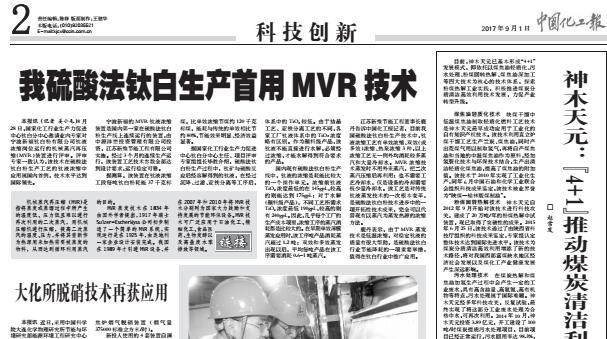
Today’s second page of the China Chemical Industry News, under the “Technological Innovation” section, features a lead story titled “First Use of MVR Technology in Our Sulfuric-Acid Process for Titanium Dioxide Production” (by reporter Jiang Xiaomao).
On August 28, the Titanium Dioxide Sub‑Center of the National Chemical Industry Productivity Promotion Center convened industry experts to evaluate the mechanical vapor recompression (MVR) unit operating at the titanium‑solution concentration stage of Ningbo Xinfu Titanium Dioxide Co., Ltd. The reviewing experts unanimously agreed that this technology, the first to be applied in the titanium‑solution concentration process of the sulfuric acid–based titanium dioxide production route, is comparable to international standards.
Ningbo Xinfu’s MVR titanium‑liquid concentration unit is the first of its kind in China to operate continuously on a sulfuric‑acid‑process titanium dioxide production line. It was funded by Zhongyuan Fengmao Investment Management Co., Ltd. and implemented by Jiangsu Xinwei Energy‑Saving Engineering Co., Ltd. After three months of continuous operation, all process‑technology parameters have met the design specifications, with stable and reliable performance.
According to calculations, this unit consumes 37 kilograms of standard coal per ton of titanium dioxide in the titanium‑liquid concentration stage, saving approximately 120 kilograms of standard coal compared with single‑effect concentration. Its energy consumption is reduced by 80% relative to conventional single‑effect systems, delivering significant energy savings and substantial economic benefits.
According to Bi Sheng, Director of the Titanium Dioxide Division at the National Center for Promoting Productivity in the Chemical Industry and Head of the Project Review Expert Panel, during the sulfuric acid process for producing titanium dioxide, the titanium‑rich solution obtained by dissolving titanium ore in sulfuric acid contains a relatively low TiO₂ concentration after undergoing steps such as sedimentation, filtration, and ferrous‑iron separation. Due to variations in crystallization and ferrous‑iron separation processes, the TiO₂ concentration in the titanium‑solution stream differs slightly among manufacturers. As a pigment‑grade product, this titanium solution cannot be directly hydrolyzed; it must first be concentrated before hydrolysis can yield a product that meets the required specifications.
Among existing domestic titanium dioxide production lines that employ the sulfuric acid process, the concentration of the titanium‑rich solution is one of the most energy‑intensive operations. Prior to concentration, the TiO₂ content in the solution typically ranges from 145 g/L at the lower end to as high as 175 g/L; for hydrolysis—producing pigment‑grade product—the required TiO₂ concentration varies between approximately 190 g/L and 240 g/L, depending on the specific process. Consequently, steam consumption in the concentration step accounts for a significant portion of the overall production cost at most plants. In early single‑effect thin‑film evaporation systems, this operation consumed more than 1.2 tonnes of steam per tonne of product; with the introduction of double‑effect and multi‑effect evaporation, average steam consumption has been reduced to 0.6–1.0 tonne per tonne of product.
Lu Dan, chairman of Jiangsu Xinwei Energy-Saving Engineering, told a reporter from China Chemical Industry News that, in China’s current sulfuric acid–based titanium dioxide production process, there are three main methods for concentrating the titanium‑rich solution: single‑effect concentration, double‑effect (or multi‑effect) concentration, and heat‑pump concentration. All these processes consume substantial amounts of steam and large volumes of cooling water. By contrast, MVR concentration technology eliminates the need for external steam by compressing and reusing the secondary steam, and it also dispenses with process cooling water, requiring only a minimal amount of cooling water for equipment cooling. This technology represents a fundamental breakthrough over conventional titanium‑solution evaporation methods and constitutes a pioneering advancement in sulfuric acid–based titanium dioxide production, capable of replacing existing concentration processes that rely on steam as the primary heat source.
Lu Dan stated that, as MVR evaporation operates at low temperatures, it significantly enhances the stability of titanium liquor quality and represents an important measure for energy conservation and consumption reduction in the sulfuric acid–based titanium dioxide industry, making it worthy of widespread adoption across the sector.
[Link]
Mechanical Vapor Recompression (MVR) refers to the process of compressing low‑temperature, low‑pressure secondary steam—generated during evaporation or distillation and typically difficult to reuse—using a mechanical compressor. This increases the steam’s temperature and pressure, allowing it to be reused as a heat source to preheat the feed material to be evaporated, thereby achieving the goal of steam recycling.
MVR evaporation technology was first proposed by foreign scholars in 1834. In 1917, the Swiss company Sulzer-Escher-Wyss built a rudimentary MVR system, which entered operational use in 1925 after being designed and installed by an Austrian enterprise. China did not introduce MVR equipment until 1989, and in 2007 and 2010, MVR technology was respectively designated as an energy-saving and environmentally friendly device strongly encouraged and supported for development at the national level. MVR technology finds broad applications in sectors such as petrochemicals, fine chemicals, food and pharmaceuticals, biofermentation, and the treatment of high-salinity wastewater with low discharge.
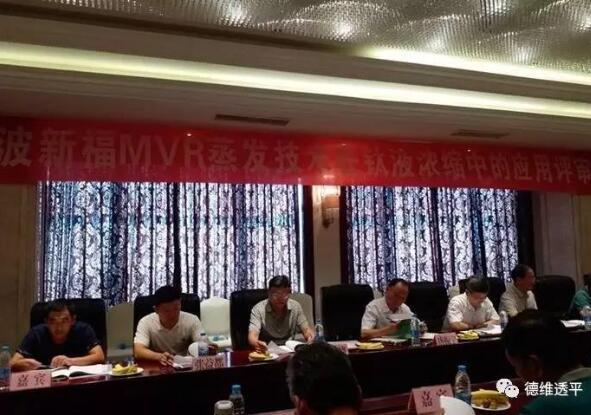
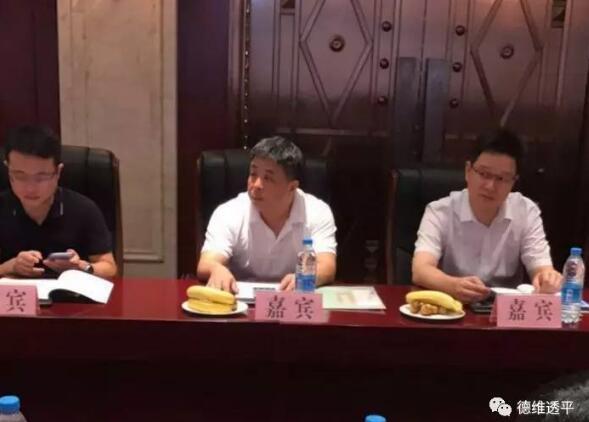
Luo Chunlong, Chairman of Turbovap, attended the review.
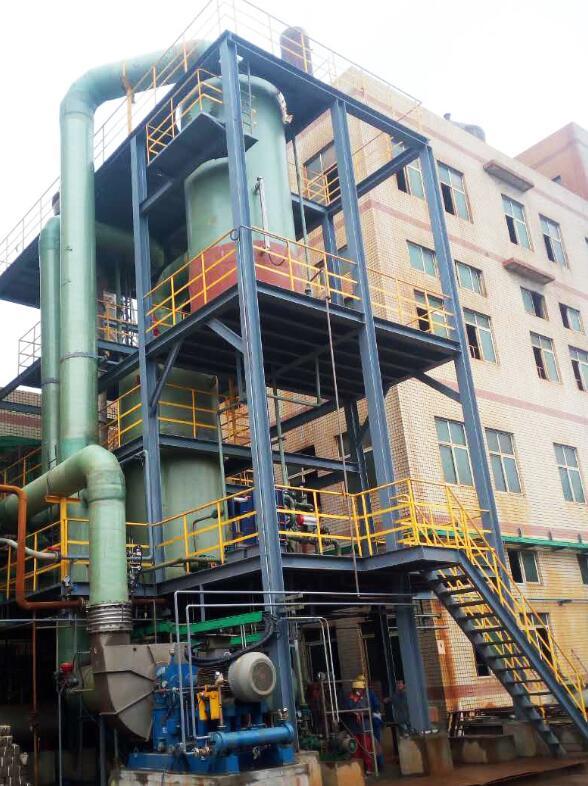
Ningbo Xinfu Titanium Liquid Concentration Project Site
Keywords:
Other Information
Applications of Turbovap High-Speed Direct-Drive Steam Compressors Across Multiple Industries


Contact Us

Hotline


Address
No.198, Jinwu Rd, Liyang 213300, Jiangsu, China